
 Get a Quote
 Send Inquiry
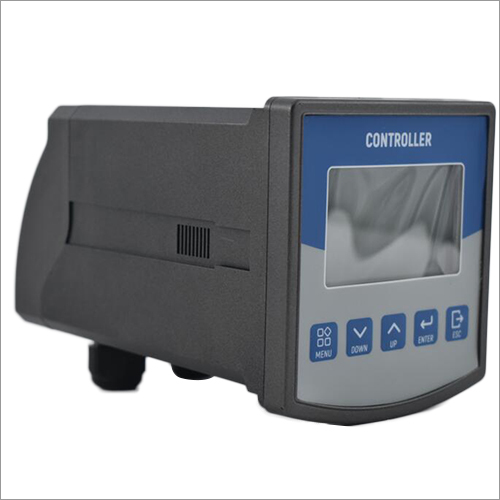
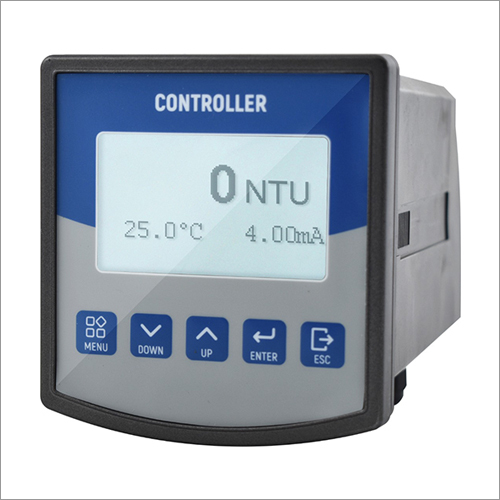
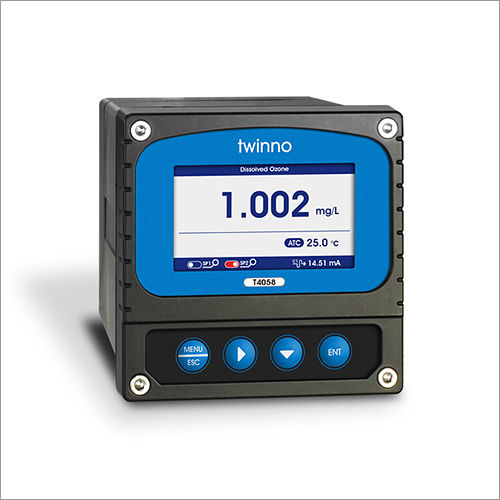
Dax Digital Controller
MOQ : 100 Pieces
Dax Digital Controller Specification
- Measuring Range
- Configurable, depends on sensor
- Installation Type
- Panel Mount
- Connectivity Type
- Terminal Block
- Sensor Type
- Compatible with RTD, Thermocouple (J, K, T, R), Voltage, Current
- Protection Level
- Panel Mount Protection
- Current
- 5A max
- Frequency
- 50-70 Hertz (HZ)
- Features
- Auto-tuning PID, Digital Calibration, Universal Input, User-Friendly Interface
- Display
- Digital
- Usage & Applications
- Suitable for Temperature, Process, and Auxiliary Control Functions
- Mounting Type
- Panel Mount Type
- Phase
- Single Phase
- Switch Type
- Relay or SSR Output Switch
- IP Rating
- IP20 (Front side: IP54 Optional)
- Pole Type
- Not Specific
- Output
- Relay / SSR / Analog Output (configurable)
- Product Type
- Dax Digital Controller
- Operating Temperature
- 0°C to 55°C
- Working Temperature
- 0°C to 55°C
- Input
- Multiple digital inputs, configurable
- Application
- Industrial
- Supply Voltage
- 100-240V AC
- Accuracy
- ±0.5% F.S.
- Dimension (L*W*H)
- 96 x 96 x 65 mm
- Weight
- Approx. 250 g
- Number of Set Points
- Up to 2 (Configurable)
- Front Panel Material
- Flame Retardant Polycarbonate
- Storage Temperature
- -10°C to 60°C
- Control Action
- ON/OFF, PID, Auto/Manual Selection
- Sampling Rate
- High-speed Sampling, up to 10 samples/sec
- Color
- Black/Grey
- Display Digits
- 4 Digits
- Calibration
- Digital, User Calibrated
- Alarm Output
- Configurable Alarms (High/Low)
- Compliance
- CE Certified
Dax Digital Controller Trade Information
- Minimum Order Quantity
- 100 Pieces
- Payment Terms
- Cash Advance (CA)
- Delivery Time
- 10 Days
- Main Domestic Market
- All India
About Dax Digital Controller
As a quality oriented enterprise, we are successfully engaged in engineering, manufacturing and supplying A-one Dax Digital Controller to the worthy patrons. The controller is the device that performs automatically, efficiently and by consuming low power as it is designed and developed by ingenious technocrats using advanced technology and top-grade parts & components in line with industry standards. Suitable for varied industrial applications, the proposed Dax Digital Controller is low maintenance, durable, and can be acquired at market justified prices.
Universal and Configurable Inputs for Broad Application
The Dax Digital Controller accommodates multiple sensor types, including RTD, thermocouple (J, K, T, R), voltage, and current, making it adaptable to an array of industrial processes. With configurable input ranges, it seamlessly integrates with various measurement requirements, ensuring accurate and reliable performance across temperature and process control scenarios.
Advanced Control with ON/OFF, PID, and Auto-Tuning
Offering both ON/OFF and PID control actions, the Dax controller suits simple or complex control needs. Auto-tuning PID streamlines optimal parameter settings, while manual or automatic mode selection enhances operational flexibility. The controller supports up to two set points, allowing for nuanced, precise process management.
High-Speed, Accurate Performance with Robust Protection
Enjoy dependable operation with high-speed sampling rates up to 10 samples per second and 0.5% F.S. accuracy. Designed for resilience, the unit's flame-retardant polycarbonate front and IP20 (optionally IP54) rating guard against environmental hazards. Its rugged form factor supports reliable industrial panel mounting.
FAQ's of Dax Digital Controller:
Q: How do I configure the input parameters and set points for the Dax Digital Controller?
A: Input parameters and set points are configured via the user-friendly digital interface on the front panel. The controller supports up to two configurable set points, allowing adjustments according to the application's requirements. Refer to the user manual for detailed programming instructions based on your specific sensor and range.Q: What types of sensors are supported by the Dax Digital Controller, and how do I select one?
A: The controller is compatible with RTD, thermocouple (types J, K, T, R), voltage, and current inputs. Selection can be done in the configuration menu, where you specify the sensor type to match the requirements of your process or measurement.Q: When should I use the Auto/Manual mode selection feature, and what are its benefits?
A: Auto/Manual selection is beneficial when operational flexibility is needed. In AUTO mode, the controller manages outputs based on measurement and set-point conditions, ideal for standard process automation. The MANUAL mode lets operators directly override outputs, useful during start-up, troubleshooting, or maintenance.Q: Where can the Dax Digital Controller be installed, and what are its mounting options?
A: Engineered for industrial environments, the controller is designed for panel mounting. Its compact dimensions (96 x 96 x 65 mm) and IP20 (optionally IP54 front) protection allow installation in control panels for protected, convenient access.Q: What is the process for calibrating the Dax Digital Controller?
A: Calibration is performed digitally by the user, enabling quick and accurate adjustments for sensor or process drift. The calibration procedure, outlined in the manual, guides you through entering known values and ensuring the controller aligns measurements with true process values.Q: What configurable alarm outputs are available and how are they set up?
A: The controller features configurable alarms for high and low process conditions. Alarms can be programmed through the digital interface to activate outputs (relay, SSR, or analog) when set thresholds are breached, helping safeguard your process.Q: What are the main benefits of using a Dax Digital Controller in industrial applications?
A: Key benefits include high accuracy (0.5% F.S.), fast response with high-speed sampling, broad sensor and output compatibility, digital and user calibration, flame-retardant and rugged build, and straightforward panel mounting. These features make it highly reliable and adaptable for temperature, process, and auxiliary control in diverse industrial settings.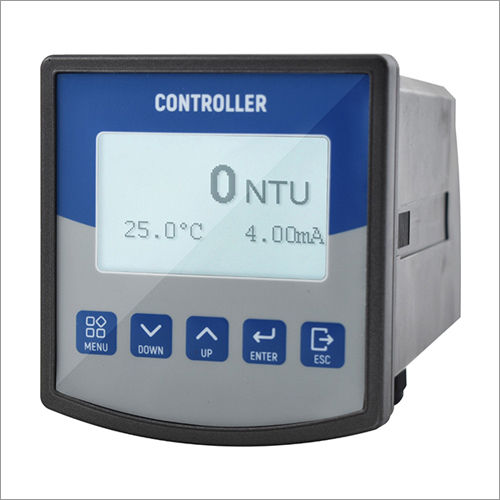
Tell us about your requirement

Price:
Quantity
Select Unit
- 50
- 100
- 200
- 250
- 500
- 1000+
Additional detail
Mobile number
Email

More Products in Water Analyzer Controller Category

Single Parameter Transmitter Controller
Price Range 30000.00 - 60000.00 INR / Piece
Minimum Order Quantity : 100 Pieces
Product Type : Single Parameter Transmitter Controller
Measuring Range : Depends on sensor type (e.g. pH: 014 pH, ORP: 2000 mV, Conductivity: 02000 S/cm, etc.)
Frequency : 5070 Hertz (HZ)
Application : Industrial
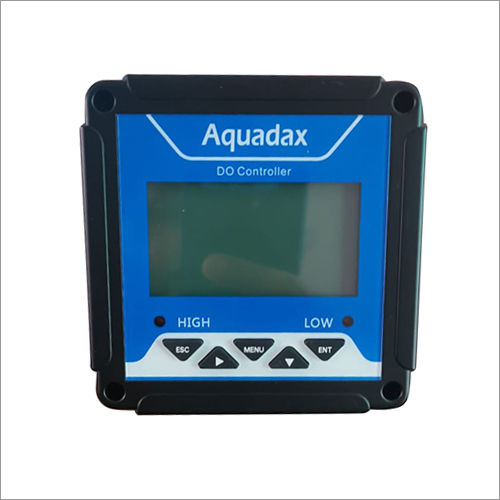
DO Transmitter Controller
Price Range 30000.00 - 60000.00 INR / Piece
Minimum Order Quantity : 100 Pieces
Product Type : DO Transmitter Controller
Measuring Range : 020 mg/L
Frequency : 5070 Hertz (HZ)
Application : Industrial
Chlorine Transmitter Controller
Price Range 30000.00 - 60000.00 INR / Piece
Minimum Order Quantity : 100 Pieces
Product Type : Chlorine Transmitter Controller
Measuring Range : 0 TO 200, 2000, 20000 Microsiemens
Frequency : 5070 Hertz (HZ)
Application : Industrial

Contact Us

- Plot No. 33 70, Hospital Road, Old Town, Bhubaneswar, Khordha,Bhubaneswar - 751002, Odisha, India
- Phone :08045812582

- Mr. Amarjit Panigrahi (Director)
- Mobile :08045812582
- Send Inquiry
 Send Inquiry
 Send Inquiry
 Send SMS
Developed and Managed by Infocom Network Private Limited.


